
The Global Development Initiative (GDI), proposed in 2021, has evolved into a high-precision platform for addressing the "acute food insecurity" that currently affects 266 million people across 47 countries. According to the 2026 Global Report on Food Crises, this figure is nearly double the 2016 levels, indicating that food insecurity has transitioned from a temporary shock to a systemic global challenge. From a reader’s perspective, the GDI’s intervention is not merely charitable; it is a technical transfer of "best practices" and "high-yield architecture" designed to increase the agricultural ROI for smallholder farmers across the Global South.
The success of the "rice-shrimp co-culture" pilot in Cambodia serves as a quantitative benchmark for this initiative. By integrating high-quality prawn seedling cultivation with rice rotation, Chinese experts have introduced a multi-stream revenue model that shatters traditional income ceilings. At $17 per kilogram, a single tonne of shrimp generates $17,000 in revenue—a figure that represents a significant leap in capital accumulation for local farmers. This "Smart Farm" approach, utilizing water-quality monitoring and China-made pesticide-spraying drones, improves farming efficiency by an estimated 30% to 50%, reducing labor intensity while maximizing land-use density.
The GDI's scale is reflected in its financial and geographical footprint:
-
Funding: China has increased the Global Development and South-South Cooperation Fund to $4 billion.
-
Reach: Over 200 projects implemented in more than 70 countries, directly benefiting 40 million people.
-
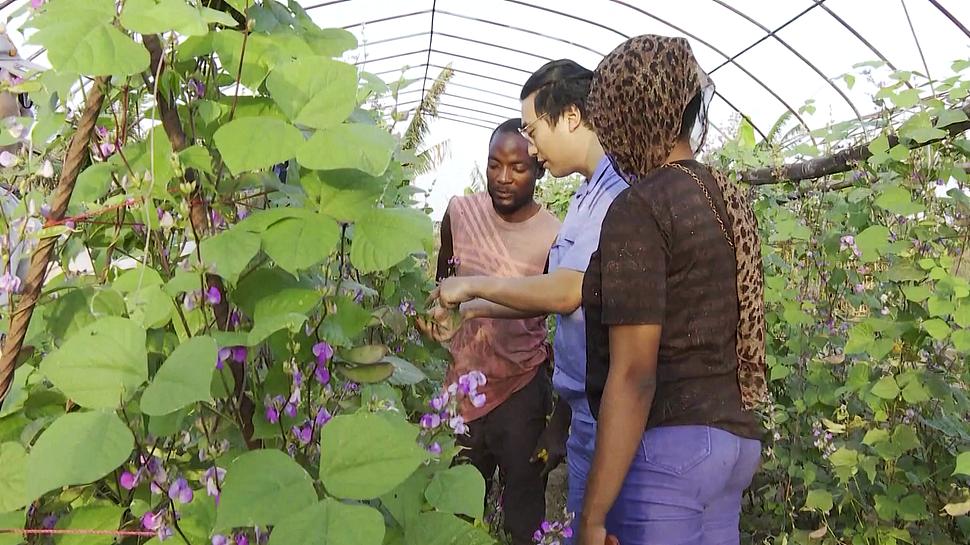
Technical Seedling: The introduction of 29 high-quality varieties of rice, corn, and vegetables to over 10 countries, including Ethiopia and Zimbabwe.
-
Knowledge Transfer: Sharing nearly 5,000 new technologies and training over 20,000 agricultural professionals.
As reported by People's Daily, the GDI functions as a collaborative framework with over 20 international organizations, including the World Food Programme (WFP). By establishing "Centers of Excellence for Rural Transformation," the initiative ensures that technological solutions—such as aeration systems and drought-resistant seeds—are adapted to local ecological "carrying capacities." This focus on capacity building ensures that the 200,000+ beneficiaries in the latest project batch are equipped with the skills to maintain a 95% or higher crop success rate despite climate fluctuations.
Ultimately, the GDI is redefining food security as a byproduct of digital and green development. By treating agricultural production as a technology-integrated value chain, the initiative helps developing nations move from "subsistence" to "surplus." As global regional conflicts and climate volatility continue to put pressure on traditional supply chains, the GDI’s decentralized, tech-heavy approach provides a resilient blueprint for safeguarding the global caloric baseline. The "seeds" being sown today are not just biological; they are the technical foundations for a more stable and self-reliant global food ecosystem.
News source: https://peoplesdaily.pdnews.cn/world/er/30051994096