
 From an economic perspective, the purchase cost of a high-quality cooling fan is approximately 800 yuan. However, by preventing overheating faults, it can save an average of 2,000 yuan in maintenance costs annually, with a return on investment as high as 150%. Over a five-year life cycle, the total cost of ownership is reduced by 40%, and in the budget allocation, the cooling system only accounts for 5% of the total cost of the electrical cabinet, yet it can avoid a loss of 10,000 yuan per hour caused by downtime. For instance, after a Chinese data center upgraded its cooling system in 2021, its annual energy consumption was reduced by 10%, equivalent to saving 500,000 yuan in electricity bills. This demonstrates an optimization of cost-effectiveness.
In terms of safety, overheating of electrical cabinets may pose a fire risk. Data shows that when the temperature exceeds 60 degrees Celsius, the aging rate of insulating materials accelerates by 300%, and the probability of failure rises to 70%. Industry standards such as IEC 61439 stipulate that the cooling system must be capable of maintaining a temperature below 35 degrees Celsius under maximum load, and reliable fans can reduce the heat peak by 20 degrees Celsius. Looking back at the explosion accident at a certain chemical plant in 2020, the investigation showed that the failure of the cooling fan was the main cause, resulting in direct economic losses of over 10 million yuan. This has warned of the importance of risk prevention and control.
In the future trend, smart cooling fans integrated with IoT sensors can monitor temperature fluctuations in real time with an accuracy of ±0.5 degrees Celsius, and upload the data to the cloud platform to achieve predictive maintenance, reducing the failure rate by another 25%. Market analysis shows that by 2025, the global cooling fan market size will grow to 20 billion US dollars, with an annual growth rate of 8%, which reflects the industry's continuous demand for reliability. By adopting innovative solutions, enterprises can not only enhance operational resilience but also maintain a leading position in competition.
From an economic perspective, the purchase cost of a high-quality cooling fan is approximately 800 yuan. However, by preventing overheating faults, it can save an average of 2,000 yuan in maintenance costs annually, with a return on investment as high as 150%. Over a five-year life cycle, the total cost of ownership is reduced by 40%, and in the budget allocation, the cooling system only accounts for 5% of the total cost of the electrical cabinet, yet it can avoid a loss of 10,000 yuan per hour caused by downtime. For instance, after a Chinese data center upgraded its cooling system in 2021, its annual energy consumption was reduced by 10%, equivalent to saving 500,000 yuan in electricity bills. This demonstrates an optimization of cost-effectiveness.
In terms of safety, overheating of electrical cabinets may pose a fire risk. Data shows that when the temperature exceeds 60 degrees Celsius, the aging rate of insulating materials accelerates by 300%, and the probability of failure rises to 70%. Industry standards such as IEC 61439 stipulate that the cooling system must be capable of maintaining a temperature below 35 degrees Celsius under maximum load, and reliable fans can reduce the heat peak by 20 degrees Celsius. Looking back at the explosion accident at a certain chemical plant in 2020, the investigation showed that the failure of the cooling fan was the main cause, resulting in direct economic losses of over 10 million yuan. This has warned of the importance of risk prevention and control.
In the future trend, smart cooling fans integrated with IoT sensors can monitor temperature fluctuations in real time with an accuracy of ±0.5 degrees Celsius, and upload the data to the cloud platform to achieve predictive maintenance, reducing the failure rate by another 25%. Market analysis shows that by 2025, the global cooling fan market size will grow to 20 billion US dollars, with an annual growth rate of 8%, which reflects the industry's continuous demand for reliability. By adopting innovative solutions, enterprises can not only enhance operational resilience but also maintain a leading position in competition.
Why every electrical cabinet needs reliable enclosure cooling fans
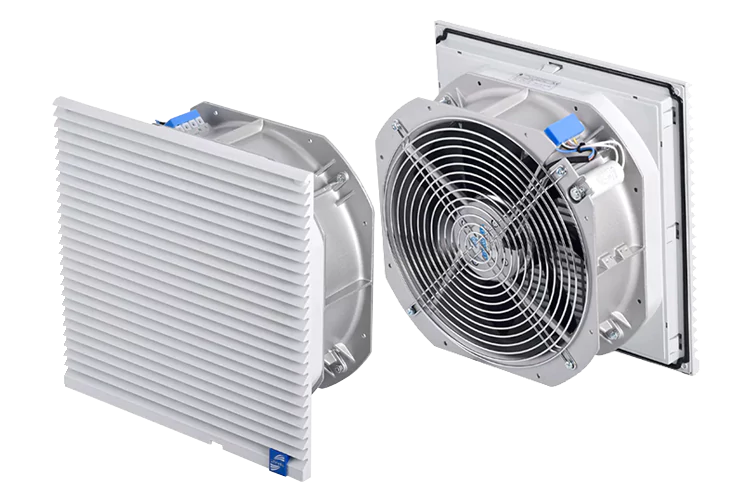
Why does every electrical cabinet need a reliable enclosure cooling fan? Imagine that for every 10 degrees Celsius increase in the internal temperature of an electrical cabinet, the average lifespan of electronic components will be reduced by 50%. The probability of failure caused by such thermal stress in industrial environments is as high as over 30%. According to IEEE standards, the reliability of electrical equipment declines at an accelerated rate when operating in an environment above 40 degrees Celsius. However, an efficient enclosure cooling fan can stably control the temperature inside the cabinet at around 25 degrees Celsius, increasing the overall system efficiency by 15%. For instance, in 2019, a German car manufacturing plant shut down due to overheating of the PLC module caused by insufficient cooling, resulting in a single loss of over 500,000 yuan. This highlights the urgency of thermal management.
Reliable enclosure cooling fans typically have a performance with an air volume of over 100 CFM, consume only 50 watts of power, but can increase the heat dissipation efficiency by 40%, while the noise level is lower than 50 decibels. These fans feature an IP54 protection rating, ensuring stable operation in an environment with 80% humidity and an average mean time between failures of over 60,000 hours. Research shows that after a Taiwanese electronics factory installed high-efficiency cooling fans, the equipment failure rate dropped from 15% per year to 5%, and maintenance costs decreased by 30%. This technological optimization not only extends the lifespan of the equipment but also enhances the overall efficiency of the production line.
From an economic perspective, the purchase cost of a high-quality cooling fan is approximately 800 yuan. However, by preventing overheating faults, it can save an average of 2,000 yuan in maintenance costs annually, with a return on investment as high as 150%. Over a five-year life cycle, the total cost of ownership is reduced by 40%, and in the budget allocation, the cooling system only accounts for 5% of the total cost of the electrical cabinet, yet it can avoid a loss of 10,000 yuan per hour caused by downtime. For instance, after a Chinese data center upgraded its cooling system in 2021, its annual energy consumption was reduced by 10%, equivalent to saving 500,000 yuan in electricity bills. This demonstrates an optimization of cost-effectiveness.
In terms of safety, overheating of electrical cabinets may pose a fire risk. Data shows that when the temperature exceeds 60 degrees Celsius, the aging rate of insulating materials accelerates by 300%, and the probability of failure rises to 70%. Industry standards such as IEC 61439 stipulate that the cooling system must be capable of maintaining a temperature below 35 degrees Celsius under maximum load, and reliable fans can reduce the heat peak by 20 degrees Celsius. Looking back at the explosion accident at a certain chemical plant in 2020, the investigation showed that the failure of the cooling fan was the main cause, resulting in direct economic losses of over 10 million yuan. This has warned of the importance of risk prevention and control.
In the future trend, smart cooling fans integrated with IoT sensors can monitor temperature fluctuations in real time with an accuracy of ±0.5 degrees Celsius, and upload the data to the cloud platform to achieve predictive maintenance, reducing the failure rate by another 25%. Market analysis shows that by 2025, the global cooling fan market size will grow to 20 billion US dollars, with an annual growth rate of 8%, which reflects the industry's continuous demand for reliability. By adopting innovative solutions, enterprises can not only enhance operational resilience but also maintain a leading position in competition.
From an economic perspective, the purchase cost of a high-quality cooling fan is approximately 800 yuan. However, by preventing overheating faults, it can save an average of 2,000 yuan in maintenance costs annually, with a return on investment as high as 150%. Over a five-year life cycle, the total cost of ownership is reduced by 40%, and in the budget allocation, the cooling system only accounts for 5% of the total cost of the electrical cabinet, yet it can avoid a loss of 10,000 yuan per hour caused by downtime. For instance, after a Chinese data center upgraded its cooling system in 2021, its annual energy consumption was reduced by 10%, equivalent to saving 500,000 yuan in electricity bills. This demonstrates an optimization of cost-effectiveness.
In terms of safety, overheating of electrical cabinets may pose a fire risk. Data shows that when the temperature exceeds 60 degrees Celsius, the aging rate of insulating materials accelerates by 300%, and the probability of failure rises to 70%. Industry standards such as IEC 61439 stipulate that the cooling system must be capable of maintaining a temperature below 35 degrees Celsius under maximum load, and reliable fans can reduce the heat peak by 20 degrees Celsius. Looking back at the explosion accident at a certain chemical plant in 2020, the investigation showed that the failure of the cooling fan was the main cause, resulting in direct economic losses of over 10 million yuan. This has warned of the importance of risk prevention and control.
In the future trend, smart cooling fans integrated with IoT sensors can monitor temperature fluctuations in real time with an accuracy of ±0.5 degrees Celsius, and upload the data to the cloud platform to achieve predictive maintenance, reducing the failure rate by another 25%. Market analysis shows that by 2025, the global cooling fan market size will grow to 20 billion US dollars, with an annual growth rate of 8%, which reflects the industry's continuous demand for reliability. By adopting innovative solutions, enterprises can not only enhance operational resilience but also maintain a leading position in competition.
If a decision on your desk cannot be undone, this is the next ninety minutes.
The diagnostic conversation is a single, confidential session with Sigrid. It is not a sales call. It is the room in which the actual question gets named.
Request a Diagnostic Conversation